WAL, or write-ahead logging, is one of the core PostgreSQL mechanisms for durability and recovery. PostgreSQL records changes in the WAL before applying them to data files so the database can recover a consistent state after a crash.
For platform teams, WAL matters beyond database internals. It underpins streaming replication, point-in-time recovery, backup consistency, and many restore workflows that developers may only see during incidents.
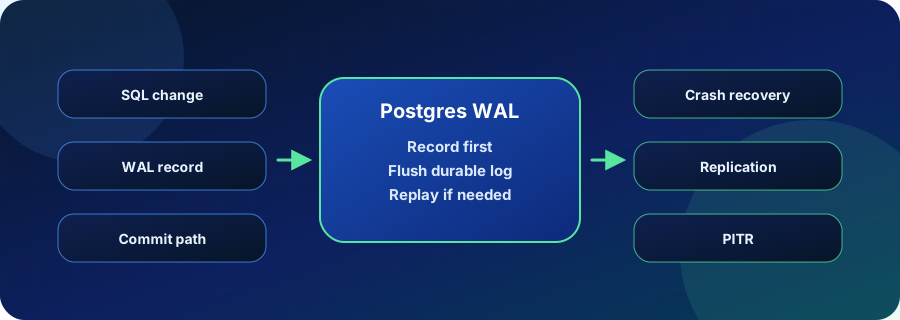
How WAL Works in PostgreSQL
When a transaction changes data, PostgreSQL writes enough information to WAL so the change can be replayed or recovered if the server crashes. The data files do not need to be fully synchronized at every moment because WAL can restore consistency.
WAL records are also used by replication and continuous archiving. That is why backup and recovery plans need to include both a base backup and enough WAL history to reach the desired recovery point.
Where Teams See WAL in Practice
Many teams encounter WAL during backup, restore, replication, and storage troubleshooting. WAL growth, archiving gaps, and replication lag can all become production issues if they are not observed and tested.
Common patterns include:
- crash recovery after an unclean shutdown
- streaming replication to standby systems
- PITR through archived WAL replay
- backup consistency with base backups
- investigating write-heavy workloads and retention pressure
Need safer Postgres recovery and test workflows? Vela helps teams create controlled branches and clones around Postgres operations while keeping core mechanisms like WAL visible and testable. Explore Vela workflows
WAL vs Data Files vs Backups
WAL is not a backup by itself. It is one part of the durability and recovery model that backups and restores rely on.
| Artifact | What it contains | Best fit | Common limitation |
|---|---|---|---|
| Data files | Current on-disk relation and index data | Normal database operation | May be inconsistent without recovery context |
| WAL | Sequential record of changes | Crash recovery, replication, PITR | Requires correct retention and replay handling |
| Base backup | Physical baseline of the cluster | Starting point for physical restore | Needs WAL to recover to later points |
| Logical dump | SQL-level export of objects and data | Portable migration and selective restore | Does not provide WAL-level replay |
How WAL Relates to Vela
Vela does not change the fact that WAL is central to PostgreSQL correctness. Teams still need to understand WAL behavior when planning recovery, replication, and operational validation.
Vela is relevant because branches and clones can create safer places to test recovery assumptions, replay workflows, migrations, and application behavior without relying on a shared staging database.
Operational Checks
Before treating WAL-dependent workflows as production ready, verify:
- WAL archiving is enabled and monitored where PITR is required
- replication slots do not create uncontrolled WAL retention
- restore drills include WAL replay validation
- teams know how to identify an appropriate recovery target
- branch or clone workflows do not hide recovery assumptions
Related Vela Reading
Start with How Vela Works, Database Branching, Branch per PR, and the Vela articles library. For adjacent glossary terms, review Archive Mode, Replication Slot, LSN (Log Sequence Number), Database Branching.