VMware exit for Postgres describes the database part of a broader move away from VMware-centered infrastructure. For PostgreSQL teams, the risk is treating the project as only a VM migration while leaving database provisioning, staging refresh, backup validation, and developer workflows unchanged.
A better migration uses the platform move to rethink how Postgres environments are created and governed. That includes branches, clones, production-like QA, recovery validation, and controlled self-service for developers.
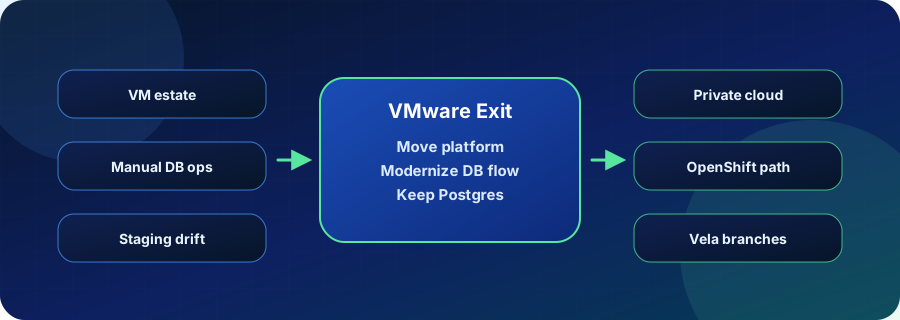
What VMware Exit for Postgres Means
A VMware exit program often focuses on compute, licensing, and platform migration. PostgreSQL adds another layer: data placement, backup and recovery, application connection strings, staging environments, and developer workflows all need a migration plan.
The best outcome is not just the same Postgres VM running somewhere else. The platform move should reduce manual restore cycles, staging contention, and bespoke database lifecycle scripts.
Where Teams See VMware Exit for Postgres
This shows up when enterprises move workloads toward OpenShift, Kubernetes, private cloud, or cloud-native infrastructure. Databases can become the blocker if the migration plan does not account for recovery, test environments, and realistic validation.
Common patterns include:
- assessing which Postgres workloads still depend on VM-era operations
- testing schema and application behavior before cutover
- replacing shared staging with database branches
- aligning backup and recovery with the new platform
- standardizing developer database workflows after migration
Moving Postgres out of a VM-era operating model? Use Vela to modernize Postgres branches, clones, and testing workflows while keeping PostgreSQL behavior familiar. Explore migration planning
VMware Rehost vs Postgres Workflow Modernization
A VMware exit can either preserve old database friction or become a chance to improve the operating model.
| Approach | Migration focus | Best fit | Common limitation |
|---|---|---|---|
| Rehost Postgres VMs | Move VM location | Fast infrastructure transition | Keeps manual database workflows |
| Rewrite database platform | Build everything new | Teams with large platform capacity | High migration risk and long timeline |
| OpenShift/private-cloud path | Standardize platform operations | Enterprise platform strategy | Needs stateful workflow design |
| Vela workflow | Modernize Postgres lifecycle | Branches, clones, QA, and migration tests | Requires access and cleanup policies |
How VMware Exit for Postgres Relates to Vela
Vela is relevant because it helps teams modernize Postgres workflows while keeping PostgreSQL recognizable. It can support branches, clones, and production-like testing during and after a platform migration.
That makes it useful when the organization wants to exit VM-era operations but does not want to rebuild every database workflow from scratch.
Operational Checks
Before moving Postgres in a VMware exit program, verify:
- which applications and jobs depend on existing database endpoints
- how staging, QA, and migration tests will work after the move
- whether backups and recovery procedures are validated on the target platform
- how branches and clones handle production-like data
- who owns cutover, rollback, and post-migration cleanup
Related Vela Reading
Start with How Vela Works, Database Branching, Branch per PR, and the Vela articles library. For adjacent glossary terms, review Private Cloud Postgres, Postgres on OpenShift, OpenShift Database Platform, Vela.