Serverless Postgres on-prem means bringing serverless-style database workflows to infrastructure that the customer controls. The goal is fast provisioning, automated lifecycle operations, and self-service developer environments without forcing data into a public multi-tenant service.
This matters for teams that like the experience of serverless database platforms but need private cloud, on-premises, sovereign, or regulated deployment boundaries. The useful question is not whether Postgres becomes magic. It is which database workflows become automated and repeatable.
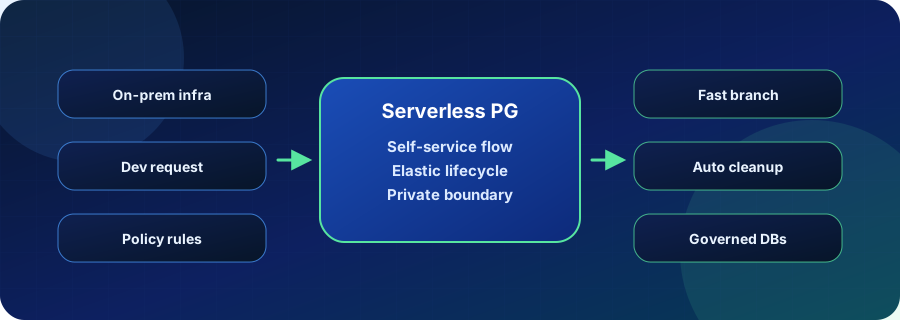
What Serverless Postgres On-Prem Means
A serverless on-prem Postgres model exposes database lifecycle workflows as platform operations. Developers should be able to request a database, branch, or clone without waiting for a custom DBA process, while platform teams still enforce quotas, access rules, and cleanup.
The term can be misleading if it implies no infrastructure. On-prem and private-cloud platforms still need infrastructure. The difference is that the database experience becomes self-service and automated.
Where Teams Use Serverless Postgres On-Prem
Teams consider this model when they want developer speed without surrendering deployment control. It is relevant for internal developer platforms, regulated environments, sovereign AI programs, and enterprises migrating from VM-era database operations to platform workflows.
Common patterns include:
- self-service Postgres environments for developers and QA
- short-lived database branches for pull requests
- private-cloud AI and analytics experiments
- governed database provisioning with quotas and cleanup
- migration testing without public SaaS data movement
Need serverless-style Postgres workflows without leaving your environment? Vela focuses on self-service branches, clones, and lifecycle workflows around familiar PostgreSQL. See how Vela works
Serverless Postgres On-Prem vs Public Serverless DBaaS
Both models optimize for developer experience, but they differ in control boundary and responsibility model.
| Model | Where it runs | Best fit | Common limitation |
|---|---|---|---|
| Public serverless DBaaS | Vendor cloud | Fast startup and low operational ownership | Control boundary may not fit every enterprise |
| Self-managed Postgres | Customer infrastructure | Maximum control | Usually ticket-driven and harder to automate |
| Serverless Postgres on-prem | Customer environment | Self-service with private control | Needs strong platform engineering |
| Vela workflow | Postgres platform layer | Branches, clones, and governed lifecycle | Requires policy and retention design |
How Serverless Postgres On-Prem Relates to Vela
Vela is relevant because it gives Postgres teams self-service lifecycle workflows around branches and clones. Those workflows can support a serverless-style experience in environments where the deployment boundary still matters.
Vela does not remove the need to run infrastructure. It makes the database workflows around that infrastructure more repeatable for developers, QA, platform engineers, and incident responders.
Operational Checks
Before adopting serverless Postgres on-prem, verify:
- which workflows should be self-service and which require approval
- how quotas, branch retention, and cleanup are enforced
- where data and metadata are allowed to live
- how developers discover and connect to branches
- how platform teams observe cost, growth, and reliability
Related Vela Reading
Start with How Vela Works, Database Branching, Branch per PR, and the Vela articles library. For adjacent glossary terms, review Private Cloud Postgres, Self-Hosted Postgres Platform, Database Platform Engineering, Vela.