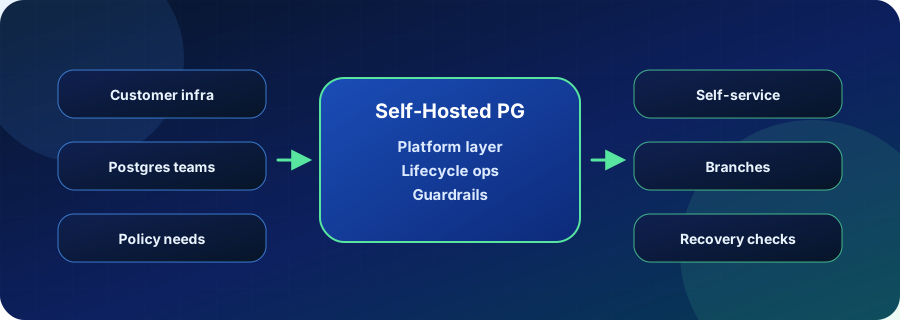
A self-hosted Postgres platform is a customer-operated platform for creating and managing PostgreSQL environments. It is different from running a few standalone Postgres servers because it standardizes lifecycle operations for teams across development, QA, recovery, and production.
This model is attractive when organizations want platform control but still need a modern developer experience. The challenge is avoiding a DIY system that becomes a pile of scripts, tickets, and manually refreshed staging databases.
What a Self-Hosted Postgres Platform Means
A self-hosted Postgres platform provides shared workflows around provisioning, branching, cloning, backup, recovery, monitoring, and access control. It runs under the customer’s ownership model rather than as a fully vendor-hosted service.
The value comes from repeatability. Developers should not need to negotiate a staging refresh every time they test a feature, and platform teams should not need to rebuild every database operation per project.
Where Teams Use Self-Hosted Postgres Platforms
Teams use self-hosted Postgres platforms when they need control over deployment boundaries, compliance, cloud spend, or platform integration but still want a better experience than raw infrastructure.
Common patterns include:
- internal developer platforms for Postgres
- private cloud database operations
- branch-per-PR and QA database workflows
- governed production-like data access
- standardized backup and recovery drills
Need self-hosted control without DIY database sprawl? Vela focuses on repeatable Postgres branching, cloning, and lifecycle workflows for teams building controlled platforms. See how Vela works
Self-Hosted Platform vs DIY Postgres vs DBaaS
Self-hosted does not have to mean every team invents its own database process.
| Approach | Operating model | Best fit | Common limitation |
|---|---|---|---|
| DIY Postgres | Project-specific scripts and servers | Small teams with simple needs | Hard to standardize and govern |
| Public DBaaS | Vendor-managed service | Low operational ownership | Control boundary may not fit |
| Self-hosted Postgres platform | Customer-operated platform workflows | Private cloud and enterprise teams | Requires platform investment |
| Vela workflow | Postgres lifecycle platform | Branches, clones, QA, and recovery validation | Needs clear policies and ownership |
How a Self-Hosted Postgres Platform Relates to Vela
Vela is relevant because it targets the workflow gap in self-hosted Postgres environments. It helps teams create branches and clones, test changes, and govern database environments without replacing PostgreSQL semantics.
That makes it a fit for teams that want self-hosted control but do not want every database workflow to be built from scratch.
Operational Checks
Before building a self-hosted Postgres platform, verify:
- which workflows need to be standardized first
- how branches and clones use production-like data safely
- how backup, PITR, and restore validation are tested
- who owns upgrades, incidents, and support
- how developer self-service is balanced with governance
Related Vela Reading
Start with How Vela Works, Database Branching, Branch per PR, and the Vela articles library. For adjacent glossary terms, review Private Cloud Postgres, Serverless Postgres On-Prem, BYOC (Bring Your Own Cloud), Vela.