Real-time analytics means analyzing operational data with very little delay between the event and the insight. Instead of waiting for nightly batch jobs, teams want dashboards, alerts, AI features, or product workflows to react to current data.
The challenge is that fresh data often lives close to transactional systems. Teams need to avoid turning analytics queries into production risk, especially when the data is large, high-churn, or tied to customer-facing workflows.
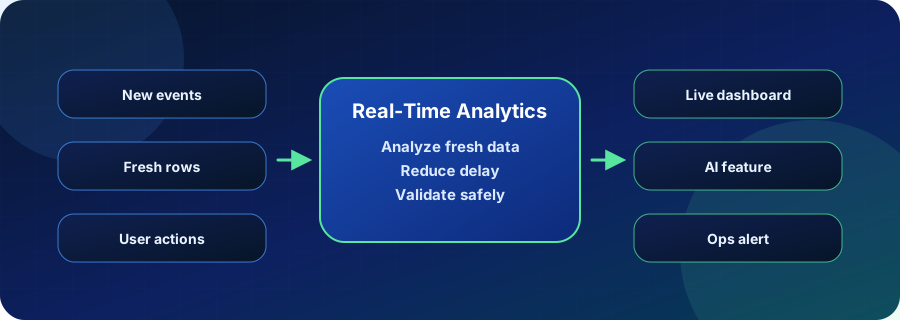
How Real-Time Analytics Works
Real-time analytics usually depends on streaming, incremental refresh, low-latency replication, or querying data close to where it is written. The architecture depends on data volume, acceptable delay, and the cost of running analytical queries near operational systems.
In Postgres workflows, teams often test whether the data can stay in Postgres, move to a specialized analytics path, or use a hybrid model. Production-like branches help validate changes before they affect the main workload.
Where Teams Use Real-Time Analytics
Teams use real-time analytics for operational dashboards, fraud monitoring, customer-facing metrics, AI context refresh, feature usage analytics, and support workflows that need fresh state.
Common patterns include:
- live product dashboards
- fraud or risk signals
- AI retrieval context refresh
- customer-facing analytics features
- testing analytics schema changes before rollout
Need to test fresh-data workflows without production risk? Vela branches help teams validate Postgres analytics changes against production-like data before rollout. Explore unified Postgres
Real-Time Analytics vs Batch Analytics
Freshness is useful only if the analytics path is reliable and does not destabilize transactional systems.
| Approach | Freshness model | Best fit | Common limitation |
|---|---|---|---|
| Batch analytics | Periodic data movement | Historical BI and scheduled reports | Data can be stale |
| Real-time analytics | Low-delay analysis | Operational alerts and live features | Needs workload [isolation](/glossary/isolation/) |
| HTAP pattern | Closer OLTP and OLAP access | Fresh operational analytics | Requires careful query controls |
| Vela branch | Isolated validation environment | Testing analytics changes | Needs realistic data and cleanup rules |
How Real-Time Analytics Relates to Vela
Vela is relevant when real-time analytics changes need to be tested against production-like data. Branches let teams validate queries, schema changes, and refresh workflows before they touch the main database path.
This helps teams decide what belongs near operational Postgres, what should move to a dedicated analytical system, and where hybrid workflows make sense.
Operational Checks
Before shipping real-time analytics workflows, verify:
- freshness requirements and acceptable delay
- query impact on transactional workloads
- branch tests against production-like data and indexes
- fallback behavior when analytics processing lags
- governance rules for customer or regulated data
Related Vela Reading
Start with How Vela Works, Database Branching, Branch per PR, and the Vela articles library. For adjacent glossary terms, review Unified Database, HTAP (Hybrid Transactional/Analytical Processing), OLTP (Online Transaction Processing), OLAP (Online Analytical Processing).