Private cloud Postgres describes PostgreSQL environments that run inside a customer-controlled private cloud, dedicated infrastructure, or enterprise platform boundary. It matters when database teams need more control over data placement, network paths, compliance rules, and operational standards than a generic shared cloud service can provide.
The modern version is not just self-managed PostgreSQL on a VM. Platform teams increasingly want self-service branches, clones, recovery validation, and developer workflows while still keeping the deployment under their own operational boundary.
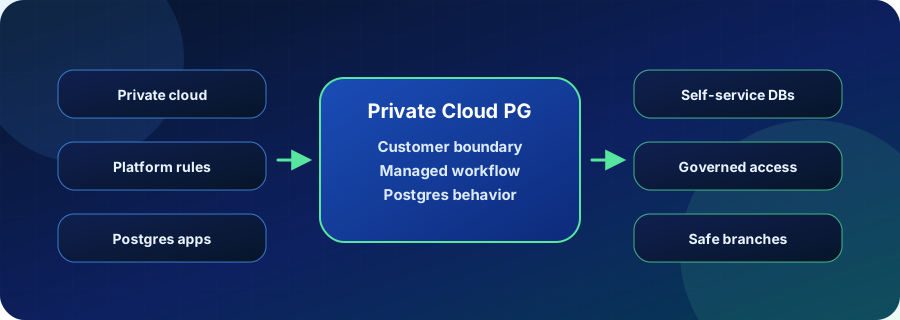
What Private Cloud Postgres Means
Private cloud Postgres combines PostgreSQL with an operating model that keeps database infrastructure inside a private-cloud or enterprise-controlled environment. The team controls placement, networking, access boundaries, and integration with existing platform standards.
The important shift is workflow. A private-cloud Postgres platform should not force every database lifecycle task through tickets and bespoke scripts. Teams still need branch creation, cloning, migration testing, backup validation, and cleanup as repeatable operations.
Where Teams Use Private Cloud Postgres
Teams use private cloud Postgres when SaaS database convenience conflicts with data residency, security posture, infrastructure strategy, or internal platform ownership. It is common in regulated environments, sovereign cloud programs, and organizations standardizing on Kubernetes or OpenShift.
Common patterns include:
- hosting production Postgres inside a controlled cloud boundary
- giving developers self-service Postgres branches without vendor-hosted data paths
- standardizing QA and migration testing across teams
- aligning Postgres workflows with private network and IAM rules
- supporting enterprise governance without reverting to manual DBA tickets
Need Postgres platform workflows inside a private-cloud boundary? Vela gives teams database branches, clones, and production-like testing workflows while keeping Postgres recognizable. Explore private-cloud Vela
Private Cloud Postgres vs Public DBaaS vs Self-Managed Postgres
The right model depends on how much control the team needs and how much platform work it is willing to own.
| Model | Control boundary | Best fit | Common limitation |
|---|---|---|---|
| Public DBaaS | Vendor cloud service | Fast database consumption | May not match private-cloud or sovereignty rules |
| Self-managed Postgres | Customer-operated stack | Maximum custom control | Requires significant platform and DBA effort |
| Private cloud Postgres | Customer-controlled platform | Governed enterprise database workflows | Needs clear platform ownership |
| Vela workflow | Postgres platform layer | Branches, clones, QA, and controlled environments | Requires lifecycle and access policies |
How Private Cloud Postgres Relates to Vela
Vela is relevant to private cloud Postgres because it focuses on the database workflow layer: branches, clones, production-like testing, and platform guardrails around PostgreSQL. It keeps Postgres behavior familiar while making lifecycle operations easier to repeat.
That makes it a fit for platform teams that want a managed experience without moving every database workflow into a public shared service.
Operational Checks
Before standardizing private cloud Postgres, verify:
- which teams own infrastructure, database operations, and platform guardrails
- where production data, backups, and logs are allowed to live
- how branches and clones inherit access-control and retention rules
- whether migration tests run against production-like data
- how recovery validation and cleanup are documented
Related Vela Reading
Start with How Vela Works, Database Branching, Branch per PR, and the Vela articles library. For adjacent glossary terms, review Serverless Postgres On-Prem, Self-Hosted Postgres Platform, Sovereign Postgres, Vela.