A Postgres vector database uses PostgreSQL to store and query embedding vectors alongside relational data. The appeal is that semantic search can stay near application state, metadata, permissions, and SQL workflows instead of living in a separate silo.
This does not mean Postgres is always the right vector system for every scale and workload. The point is that many AI applications need relational context and workflow safety as much as they need nearest-neighbor search.
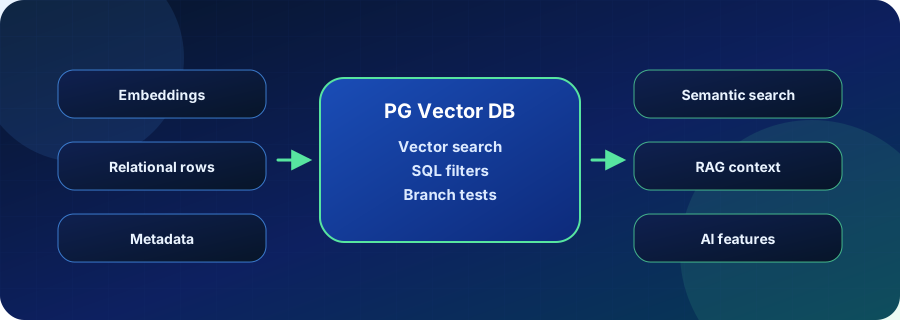
How a Postgres Vector Database Works
A Postgres vector database stores embeddings in or alongside PostgreSQL tables and uses vector search to retrieve similar records. Teams can combine that retrieval with SQL filters, joins, tenant boundaries, and other application logic.
The workflow needs testing because vector behavior depends on embedding quality, index configuration, data freshness, and the relational filters around the query.
Where Teams Use Postgres Vector Databases
Teams use Postgres vector database patterns for RAG, semantic search, recommendations, support copilots, product search, and AI agents that need both semantic retrieval and structured application data.
Common patterns include:
- semantic search over application data
- RAG retrieval with relational permissions
- hybrid keyword and vector search
- testing embedding refreshes in a database branch
- validating AI features before production rollout
Need to test vector search changes with real relational context? Vela branches let teams validate embeddings, indexes, and SQL filters in isolated Postgres environments. Explore Postgres for AI applications
Postgres Vector Database vs Standalone Vector Store
The best choice depends on whether semantic retrieval needs to stay close to relational application data.
| Approach | Data model | Best fit | Common limitation |
|---|---|---|---|
| Standalone vector store | Embeddings-first index | Specialized vector search workloads | Can split context from app data |
| Postgres vector database | Embeddings with relational data | AI features tied to Postgres state | Needs careful query and index design |
| Hybrid search in Postgres | Vectors, keywords, filters, and metadata | Production RAG and product search | More behavior to test |
| Vela branch workflow | Isolated vector workflow validation | Embedding and schema rollout tests | Requires branch retention rules |
How a Postgres Vector Database Relates to Vela
Vela is relevant because vector search changes are rarely isolated to one index. They often involve schema updates, embedding refreshes, SQL filters, permissions, and application behavior.
A Vela branch gives teams a safe place to validate those changes against production-like Postgres data before changing the main database path.
Operational Checks
Before using Postgres as a vector database, verify:
- embedding model and refresh strategy
- index type and query latency on realistic data
- tenant and permission filters around vector results
- hybrid search ranking and fallback behavior
- branch validation for schema and embedding changes
Related Vela Reading
Start with Postgres for AI Applications, Agentic Databases, Database Branching, and the Vela articles library. For adjacent glossary terms, review Vector Search, RAG with Postgres, Postgres for AI Agents, Postgres Data Platform.