Postgres on OpenShift means running PostgreSQL workloads on Red Hat OpenShift or an OpenShift-based private cloud. The goal is to bring database operations closer to the platform standards used for applications, networking, identity, and automation.
The hard part is not simply starting a Postgres container. Production teams need lifecycle workflows: provisioning, branching, cloning, backup validation, upgrades, observability, and safe migration testing.
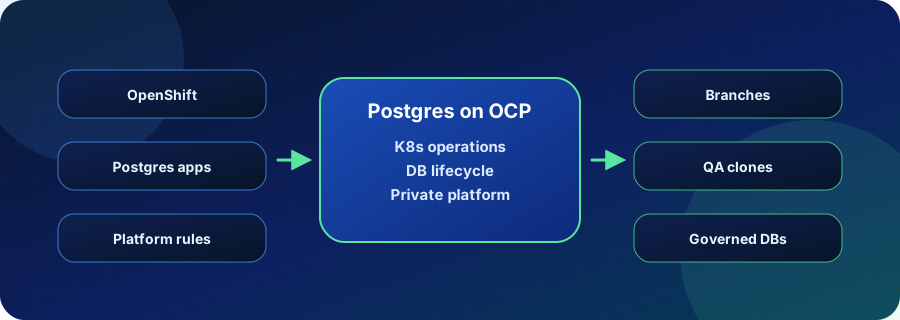
What Postgres on OpenShift Means
Postgres on OpenShift uses OpenShift as the operational platform for database workloads or database platform services. This can help teams align database operations with cluster policies, platform automation, and private-cloud deployment standards.
A useful OpenShift database platform should go beyond deployment. It should give teams controlled ways to create production-like environments, validate migrations, test application changes, and clean up temporary databases.
Where Teams Use Postgres on OpenShift
Teams use Postgres on OpenShift when they want database workflows to fit the same enterprise platform strategy as applications. This is common in private cloud, regulated industry, VMware-exit, and Kubernetes standardization programs.
Common patterns include:
- running Postgres platform services inside OpenShift
- creating developer database branches from trusted baselines
- standardizing database operations for platform teams
- testing schema migrations before production rollout
- supporting private cloud Postgres workflows on Kubernetes
Planning Postgres workflows on OpenShift? Vela helps platform teams design branching and cloning workflows around familiar PostgreSQL while keeping deployment control in the platform. Explore Postgres on Kubernetes
Postgres on OpenShift vs External DBaaS
The difference is not only where Postgres runs. It is also who controls platform integration and database lifecycle workflows.
| Approach | Operating model | Best fit | Common limitation |
|---|---|---|---|
| External DBaaS | Database outside the platform | Fast managed database consumption | May sit outside OpenShift governance boundaries |
| Self-managed Postgres on VMs | Traditional infrastructure operations | Known DBA model | Harder to automate for developers |
| Postgres on OpenShift | Kubernetes platform model | Private-cloud and platform standardization | Needs mature stateful operations |
| Vela workflow | Postgres lifecycle platform | Branches, clones, QA, and migration tests | Requires policy and ownership rules |
How Postgres on OpenShift Relates to Vela
Vela is relevant because OpenShift platform teams often need a better database experience than manually managed Postgres instances. Vela focuses on database branching, cloning, and production-like workflows around PostgreSQL.
That makes it useful when OpenShift is the strategic platform but teams still need a developer-friendly Postgres lifecycle model.
Operational Checks
Before standardizing Postgres on OpenShift, verify:
- stateful workload ownership across platform and database teams
- storage, backup, and restore validation procedures
- branch and clone workflows for development and QA
- network, identity, and secrets integration
- upgrade, observability, and incident response processes
Related Vela Reading
Start with How Vela Works, Database Branching, Branch per PR, and the Vela articles library. For adjacent glossary terms, review OpenShift Database Platform, Kubernetes-Native Postgres, Private Cloud Postgres, Vela.