pg_dump is the standard PostgreSQL utility for creating logical backups of a database. It exports database objects and data in a format that can be restored elsewhere, which makes it valuable for migrations, portability, and selective backup workflows.
The limitation is workflow fit. A pg_dump backup can be the right tool for moving data, but repeatedly dumping and restoring large databases is usually a poor fit for branch-per-PR testing or fast QA environments.
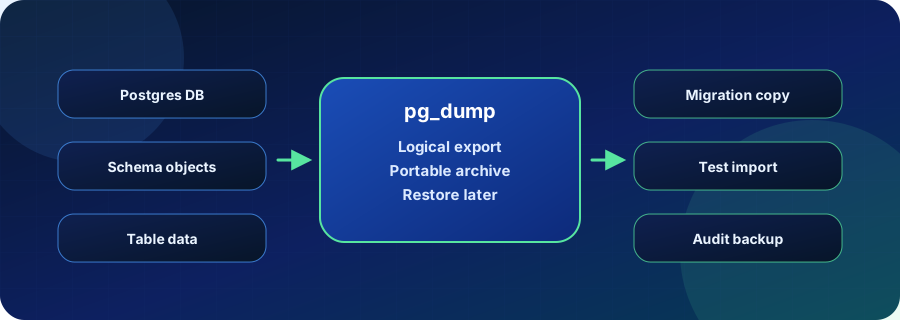
How pg_dump Works
pg_dump connects to a running PostgreSQL database and exports its schema and data at the SQL/logical level. It can produce plain SQL or archive formats that work with pg_restore.
Because pg_dump is logical, it is more portable than a physical backup. The tradeoff is that dumping and restoring can take significant time for large databases, and the restore path has to rebuild objects and load data rather than reusing a physical state.
Where Teams Use pg_dump
Teams use pg_dump when portability, selective restore, or database migration is more important than creating a fast writable branch. It is a reliable tool, but it should not be the only mechanism behind modern development and QA workflows.
Common patterns include:
- moving data between PostgreSQL environments
- creating logical backups for smaller databases
- exporting selected schemas or tables
- testing migrations between versions or environments
- creating audit artifacts for controlled data exports
Still using dump and restore for every test database? Vela branches can reduce the need for repeated pg_dump cycles when teams need production-like Postgres environments for development and QA. See Vela database branching
pg_dump vs pg_restore vs Branching
pg_dump is part of a backup and migration toolkit. It should be compared with the workflow a team is trying to support.
| Approach | Role | Best fit | Common limitation |
|---|---|---|---|
| pg_dump | Creates a logical export | Portable backup and migration | Dump time grows with data size |
| pg_restore | Restores a custom-format dump | Selective restore and rebuild | Restore can be slow for large datasets |
| pg_basebackup | Creates a physical cluster backup | [PITR](/glossary/pitr-point-in-time-recovery/) and replica setup | Less portable than logical export |
| Vela branch | Creates an isolated writable database workflow | PR, QA, and [migration testing](/vela-ci-cd-testing/) | Requires branch governance and cleanup rules |
How pg_dump Relates to Vela
Vela does not replace pg_dump for every use case. Logical exports remain useful for portability, audits, and migrations. The difference is that Vela can reduce the need to use dump and restore as the default way to create every temporary database environment.
For development and QA, a Vela branch can be a better workflow when the team needs production-like data quickly and expects to discard the environment after testing.
Operational Checks
Before depending on pg_dump for a workflow, check:
- whether the dump includes the schemas, roles, extensions, and data required
- how long dump and restore take at realistic size
- whether restore order and permissions are tested
- whether sensitive data needs masking before export
- whether a branch or clone would fit the test workflow better
Related Vela Reading
Start with How Vela Works, Database Branching, Branch per PR, and the Vela articles library. For adjacent glossary terms, review pg_restore, pg_basebackup, Logical vs Physical Backup, Database Branching.