pg_basebackup is the PostgreSQL utility for taking a physical base backup from a running server. It copies the cluster files in a way that can be used for streaming replication, standby setup, or point-in-time recovery workflows.
Because it operates at the physical cluster level, pg_basebackup solves a different problem than pg_dump. It is less about portable SQL exports and more about building a consistent recovery baseline that works with WAL replay.
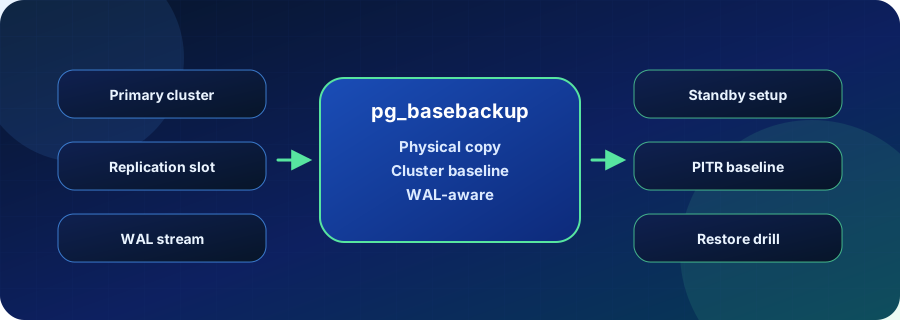
How pg_basebackup Works
pg_basebackup connects to a PostgreSQL server and copies the database cluster files while coordinating with WAL so the backup can be made consistent. The result is a physical backup of the cluster rather than a logical export of SQL objects.
That physical nature makes it useful for replicas and PITR baselines. The tradeoff is that it is tied more closely to PostgreSQL version, cluster layout, and recovery configuration than a logical dump.
Where Teams Use pg_basebackup
Teams use pg_basebackup when they need a physical backup, a standby, or a base for WAL-based recovery. It is a core operational utility, but it still needs restore testing and documentation around recovery targets.
Common patterns include:
- creating a base backup for PITR
- initializing a streaming replication standby
- testing restore procedures at cluster level
- building a recovery environment for incident rehearsal
- validating backup throughput and storage capacity
Need to validate physical recovery before an incident? Use Vela workflows to create safer places to rehearse Postgres recovery and validate application behavior against restored state. Explore Vela workflows
pg_basebackup vs pg_dump vs Branching
Physical backups, logical dumps, and database branches serve different purposes.
| Approach | Backup model | Best fit | Common limitation |
|---|---|---|---|
| pg_basebackup | Physical cluster copy | PITR baseline and replica setup | Less portable than logical dumps |
| pg_dump | Logical database export | Portable backup and migration | Can be slow for large restores |
| Storage snapshot | Infrastructure-level point-in-time copy | Fast infrastructure recovery | Needs database consistency planning |
| Vela branch | Writable Postgres environment from a baseline | Dev, QA, and recovery validation | Not a replacement for backup retention |
How pg_basebackup Relates to Vela
Vela does not replace the need to understand physical backup and WAL-based recovery. pg_basebackup remains relevant when the team needs a cluster-level backup or a replica initialization path.
Vela becomes useful around the workflow: creating controlled environments to test recovery assumptions, inspect data state, and validate application behavior without turning production into the test bench.
Operational Checks
Before relying on pg_basebackup, verify:
- WAL retention and archiving cover the restore target
- base backup duration and storage needs are measured
- replica initialization steps are documented and tested
- restore drills validate application behavior, not just server startup
- roles, extensions, and configuration expectations are included in the recovery plan
Related Vela Reading
Start with How Vela Works, Database Branching, Branch per PR, and the Vela articles library. For adjacent glossary terms, review Base Backup, PITR (Point-in-Time Recovery), WAL (Write-Ahead Logging), Database Branching.