An OpenShift database platform is an internal platform that lets teams provision, operate, and govern databases using OpenShift-aligned workflows. For Postgres, that means treating database lifecycle operations as platform capabilities instead of one-off infrastructure tasks.
This concept matters because many enterprises standardize applications on OpenShift but leave databases behind in older VM or ticket-driven models. The gap becomes visible when developers need branches, QA clones, migration tests, and consistent recovery validation.
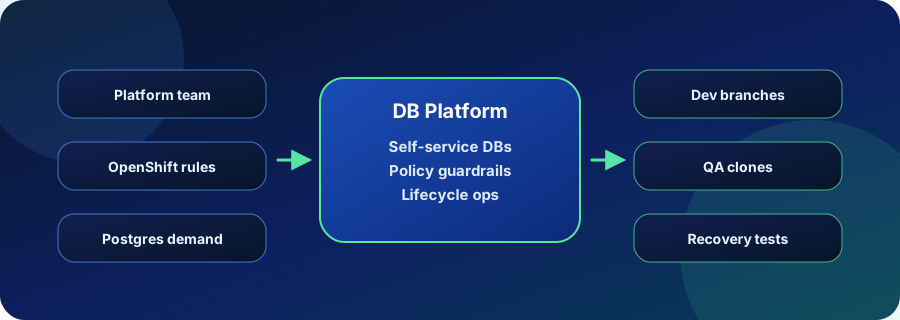
What an OpenShift Database Platform Means
An OpenShift database platform combines runtime placement, access control, automation, backup, recovery, and developer workflows into a consistent operating model. It may run databases on OpenShift, near OpenShift, or through a BYOC-style platform boundary.
The value comes from standardization. Developers should not need a different custom process for every branch, clone, migration test, or recovery rehearsal. Platform teams should be able to enforce guardrails without becoming the bottleneck for every request.
Where Teams Use OpenShift Database Platforms
OpenShift database platforms are useful when enterprises move from isolated application clusters to a broader internal developer platform. Databases become part of that platform because developers and QA teams need controlled access to realistic data environments.
Common patterns include:
- self-service Postgres provisioning for application teams
- branch-per-PR and QA database workflows
- database migration testing before production
- standardized backup and recovery validation
- private-cloud database governance around OpenShift
Need a Postgres workflow layer for OpenShift? Vela helps teams standardize branches, clones, and production-like database environments around PostgreSQL. See how Vela works
OpenShift Database Platform vs Traditional DBA Queue
A platform model should reduce manual coordination without giving up governance.
| Approach | How requests happen | Best fit | Common limitation |
|---|---|---|---|
| Traditional DBA queue | Tickets and manual scripts | Small number of controlled changes | Slow for branch-per-PR and QA workflows |
| Raw Kubernetes deployment | YAML and operator workflows | Teams with mature stateful operations | Developer lifecycle may still be missing |
| OpenShift database platform | Self-service plus policies | Enterprise platform standardization | Requires cross-team ownership |
| Vela workflow | Postgres branches and clones | Developer, QA, and migration workflows | Needs cleanup and access rules |
How an OpenShift Database Platform Relates to Vela
Vela is relevant because it focuses on the Postgres lifecycle workflows that internal platforms need: branches, clones, controlled environments, and production-like testing. It can complement an OpenShift strategy by making database environments easier to create and govern.
The goal is not to hide PostgreSQL. It is to make common Postgres operations fit the platform model.
Operational Checks
Before building an OpenShift database platform, verify:
- which database workflows should become self-service
- how branch baselines and data access are controlled
- how backup and restore validation are tested
- which teams own platform, database, and incident operations
- how costs and storage growth are observed
Related Vela Reading
Start with How Vela Works, Database Branching, Branch per PR, and the Vela articles library. For adjacent glossary terms, review Postgres on OpenShift, Database Platform Engineering, Kubernetes-Native Postgres, Vela.