OLTP, or online transaction processing, describes workloads built around many small, correct transactions. Most application databases are OLTP systems: users create accounts, place orders, update records, and expect those changes to be durable and consistent.
In PostgreSQL, OLTP design depends on schema quality, indexes, transaction boundaries, query plans, and operational discipline. Testing those details against tiny fixtures often misses the behavior that matters in production.
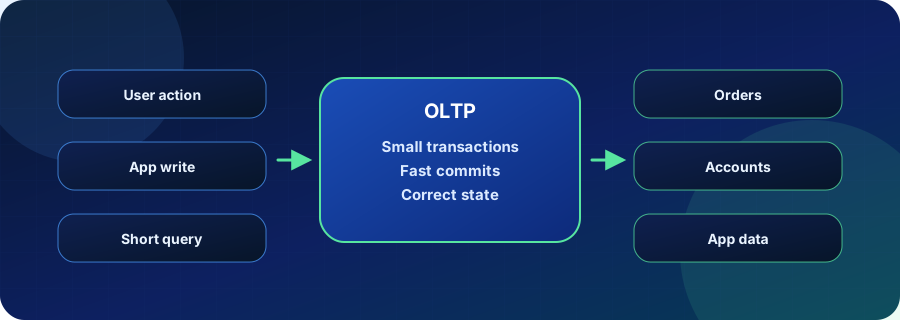
How OLTP Works
OLTP systems prioritize fast point reads, inserts, updates, deletes, and commits. The database must preserve correctness while many users and services interact with the same data.
Indexes, constraints, transactions, and isolation levels all shape OLTP behavior. A change that looks harmless in development can affect lock timing, query plans, or write amplification at production scale.
Where Teams Use OLTP
Teams use OLTP databases behind products, internal tools, payment systems, messaging workflows, order systems, and any application that depends on correct operational state.
Common patterns include:
- customer account and profile updates
- orders, payments, and ledger-like workflows
- SaaS application state
- inventory or booking updates
- testing migrations before application release
Need to test OLTP changes before they hit production? Vela branches give teams isolated Postgres environments for schema changes, migrations, and app tests against production-like data. See Vela database branching
OLTP vs OLAP vs HTAP
OLTP is the transactional side of the data stack. It should be designed and tested differently from analytical workloads.
| Pattern | Optimized for | Best fit | Common limitation |
|---|---|---|---|
| OLTP | Many small transactions | Application state and writes | Analytical scans can interfere if unmanaged |
| OLAP | Large reads and aggregations | Reporting and BI | Data freshness depends on pipeline design |
| HTAP | Closer OLTP and OLAP access | Fresh operational analytics | Needs resource isolation |
| Vela branch | Isolated Postgres test environment | Migration and app validation | Requires branch lifecycle rules |
How OLTP Relates to Vela
Vela is relevant to OLTP teams because many release risks come from database changes: migrations, indexes, constraints, and query behavior. A branch lets teams validate those changes away from production.
The goal is not to make OLTP less strict. It is to give teams production-like test environments so correctness and performance assumptions are checked earlier.
Operational Checks
Before changing OLTP workflows, verify:
- queries and migrations run against production-like data volumes
- indexes support the main read and write paths
- transactions avoid unnecessary lock contention
- branch tests include realistic application behavior
- rollback and cleanup steps are documented
Related Vela Reading
Start with How Vela Works, Database Branching, Branch per PR, and the Vela articles library. For adjacent glossary terms, review Unified Database, HTAP (Hybrid Transactional/Analytical Processing), OLAP (Online Analytical Processing), Vector Search.