OLAP, or online analytical processing, describes workloads built around analysis, aggregation, reporting, and exploration. Instead of many small writes, OLAP workloads usually scan and summarize larger sets of data.
In Postgres environments, OLAP questions often show up when teams want fresher analytics, less ETL movement, or product analytics closer to application data. The risk is that analytical queries can interfere with transactional workloads if they are not designed and tested carefully.
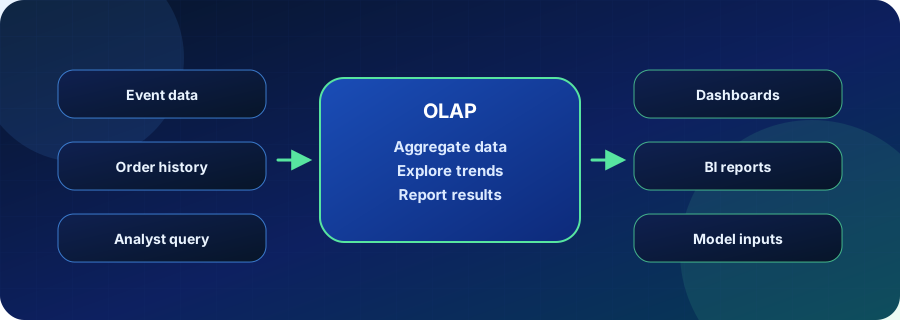
How OLAP Works
OLAP workloads favor reads, aggregations, joins, and scans that summarize data across many rows. They often need different indexes, precomputed views, or dedicated execution paths compared with OLTP workloads.
The architectural choice is whether to move data into a separate warehouse, keep some analytics near Postgres, or adopt a hybrid approach. Each option affects freshness, complexity, and operational risk.
Where Teams Use OLAP
Teams use OLAP for reporting, dashboards, customer analytics, internal operations, data science inputs, and AI feature pipelines. The shared problem is turning operational data into useful analysis without destabilizing the application database.
Common patterns include:
- customer and product usage dashboards
- financial or operational reporting
- trend analysis over historical transactions
- AI feature preparation and retrieval workflows
- testing query plans before analytical changes ship
Need to test analytical Postgres workflows safely? Vela branches let teams validate queries, schema changes, and data assumptions before pushing analytics work into production paths. Explore OLAP on Postgres
OLAP vs OLTP vs HTAP
OLAP is about analysis. The right architecture depends on freshness, volume, isolation, and team ownership.
| Pattern | Optimized for | Best fit | Common limitation |
|---|---|---|---|
| OLAP | Aggregations and historical analysis | BI, reporting, exploration | Data movement and freshness tradeoffs |
| OLTP | Fast transactional writes | Application state | Not designed for heavy analytical scans by default |
| HTAP | Closer transactional and analytical access | Fresh operational analytics | Needs strong workload controls |
| Vela branch | Safe test environment | Analytical query validation | Requires realistic data and cleanup rules |
How OLAP Relates to Vela
Vela is relevant to OLAP-style Postgres workflows when teams need to test analytical queries and data changes without disrupting the main database. A branch can provide production-like data for validation before a report, dashboard, or AI workflow goes live.
That does not mean every analytical workload belongs directly on the transactional path. Vela helps teams test the boundary and choose the right operating model.
Operational Checks
Before adding OLAP workloads near Postgres, check:
- query cost against production-like data
- whether workloads need isolation from OLTP traffic
- freshness requirements and ETL delay tolerance
- index, materialized view, or partitioning needs
- branch validation for schema and query changes
Related Vela Reading
Start with How Vela Works, Database Branching, Branch per PR, and the Vela articles library. For adjacent glossary terms, review Unified Database, HTAP (Hybrid Transactional/Analytical Processing), OLTP (Online Transaction Processing), Vector Search.