MVCC, or multi-version concurrency control, is the PostgreSQL model that lets transactions work with consistent versions of rows. Instead of forcing every reader and writer to block each other, Postgres can preserve multiple row versions and decide which version each transaction should see.
For application teams, MVCC matters because it shapes isolation behavior, vacuum needs, long-running transaction risk, and the way schema or data changes behave under load.
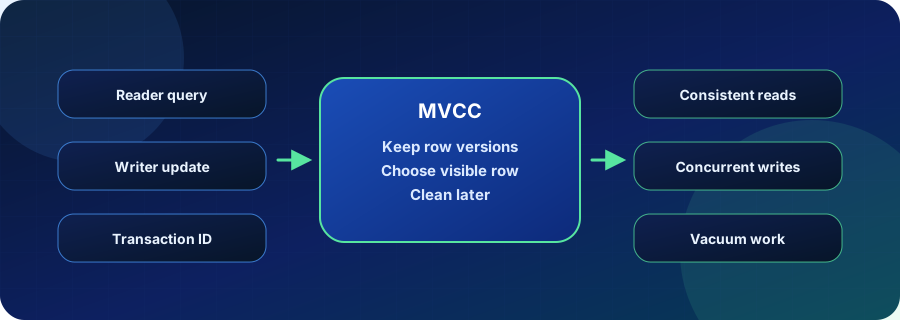
How MVCC Works in PostgreSQL
When a row changes, PostgreSQL can keep old and new row versions long enough for active transactions to see a consistent view. Visibility rules determine which version a transaction can read.
This model improves concurrency, but it also creates operational responsibilities. Dead tuples need cleanup, long-running transactions can delay vacuum, and realistic load tests are needed to understand how a migration or workload behaves.
Where Teams See MVCC in Practice
MVCC becomes visible during performance tuning, vacuum troubleshooting, schema migrations, and transaction design. It is also important when teams test changes against production-like data because concurrency patterns are hard to reproduce with tiny fixtures.
Common patterns include:
- debugging long-running transactions
- understanding vacuum and bloat behavior
- testing migrations under write load
- reviewing isolation behavior for application changes
- reproducing production query behavior in a branch
Need to test Postgres changes under realistic data conditions? Vela branches help teams validate migrations and workload behavior without using a shared staging database as the test target. See Vela database branching
MVCC vs Lock-Heavy Concurrency Models
MVCC is a concurrency strategy, not a test environment. Teams still need realistic data and workload validation.
| Concept | How it behaves | Best fit | Common limitation |
|---|---|---|---|
| MVCC | Readers see consistent row versions | Concurrent [transactional workloads](/glossary/oltp-online-transaction-processing/) | Requires vacuum and transaction discipline |
| Blocking locks | Operations wait for conflicting locks | Simple protection of exclusive changes | Can create contention and queues |
| [Snapshot isolation](/glossary/snapshot-isolation-consistent-snapshot/) | Reads from a transaction snapshot | Stable reads during a transaction | Can surprise teams if isolation is misunderstood |
| Vela branch | Tests changes in an isolated Postgres environment | Migration and workload validation | Still requires realistic concurrency testing |
How MVCC Relates to Vela
Vela does not change PostgreSQL MVCC semantics. Transactions, snapshots, locks, and vacuum behavior still come from Postgres.
Vela is useful because teams can test schema changes, data updates, and workload behavior in isolated Postgres branches before those changes run against production. That helps turn MVCC knowledge into safer release practice.
Operational Checks
Before changing MVCC-sensitive workflows, check:
- whether long-running transactions are present in production
- how migrations behave under realistic concurrent reads and writes
- whether vacuum and autovacuum settings are sufficient
- whether tests include production-like row counts and indexes
- whether branch tests reproduce isolation levels used by the application
Related Vela Reading
Start with How Vela Works, Database Branching, Branch per PR, and the Vela articles library. For adjacent glossary terms, review Transaction, Vacuum, Lock, Database Branching.