Kubernetes-native Postgres means operating PostgreSQL in a way that fits Kubernetes platform concepts such as declarative configuration, automation, service discovery, policies, and lifecycle management. It is not the same as simply putting Postgres in a container.
For Vela-style workflows, the practical question is whether Kubernetes helps developers and platform teams create, test, govern, and clean up Postgres environments more reliably.
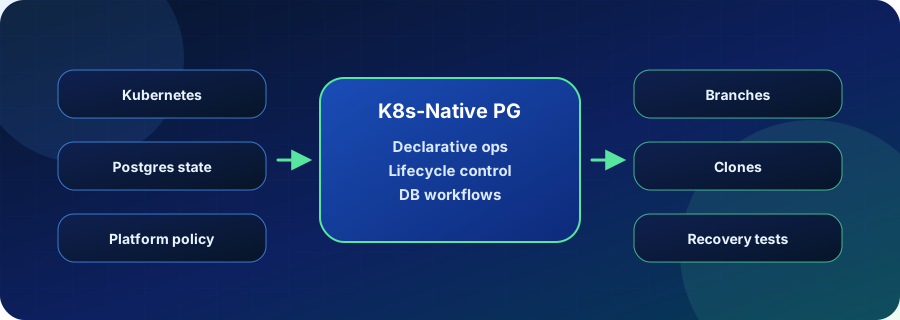
What Kubernetes-Native Postgres Means
A Kubernetes-native Postgres model aligns database operations with Kubernetes automation. This can include operators, declarative configuration, secrets, services, storage classes, observability, and cluster policy integration.
However, a complete platform also needs database-specific workflows. Developers need realistic branches and clones, QA teams need isolated environments, and platform teams need backup validation and cleanup rules.
Where Teams Use Kubernetes-Native Postgres
Teams use Kubernetes-native Postgres when Kubernetes or OpenShift becomes the standard operating layer for applications and platform services. The goal is to avoid a split-brain model where apps are platform-native but databases stay entirely manual.
Common patterns include:
- integrating Postgres with Kubernetes platform operations
- building internal database platforms
- creating self-service environments for developers
- testing migrations with branch-based workflows
- standardizing backup and recovery validation
Need Postgres workflows that fit a Kubernetes platform? Vela focuses on database lifecycle workflows around PostgreSQL, including branches and clones for safer development and QA. Explore Postgres on Kubernetes
Kubernetes-Native Postgres vs Containerized Postgres
Containerized deployment is only one part of the operating model.
| Approach | What it provides | Best fit | Common limitation |
|---|---|---|---|
| Containerized Postgres | Postgres packaged in a container | Simple dev and test setups | Lifecycle workflows still manual |
| Postgres operator | Kubernetes automation for stateful workloads | Teams comfortable with operator operations | Developer branching may not be built in |
| Kubernetes-native Postgres | Platform-aligned database operations | Internal platform standardization | Needs mature stateful governance |
| Vela workflow | Postgres branches and clones | Dev, QA, and migration workflows | Requires lifecycle policy design |
How Kubernetes-Native Postgres Relates to Vela
Vela is relevant because Kubernetes-native database platforms need more than deployment automation. They need workflows that help developers and QA teams work with realistic data safely.
Vela keeps PostgreSQL recognizable while adding branch and clone workflows that can fit a Kubernetes or OpenShift platform strategy.
Operational Checks
Before adopting Kubernetes-native Postgres, verify:
- stateful workload expertise in the platform team
- storage, backup, and recovery behavior under failure
- how branch and clone workflows are exposed to developers
- how secrets, network policy, and access controls are managed
- how upgrades and incident response are tested
Related Vela Reading
Start with How Vela Works, Database Branching, Branch per PR, and the Vela articles library. For adjacent glossary terms, review Postgres on OpenShift, OpenShift Database Platform, Database Platform Engineering, Vela.