HTAP, or hybrid transactional/analytical processing, is a pattern for running transactional and analytical workloads closer together. Instead of moving data through long ETL pipelines before analysis, HTAP aims to make operational data useful for analytics faster.
The challenge is balance. Transactional systems need correctness and predictable latency, while analytical queries can be scan-heavy and resource-intensive. A useful HTAP design needs guardrails, workload isolation, and realistic testing.
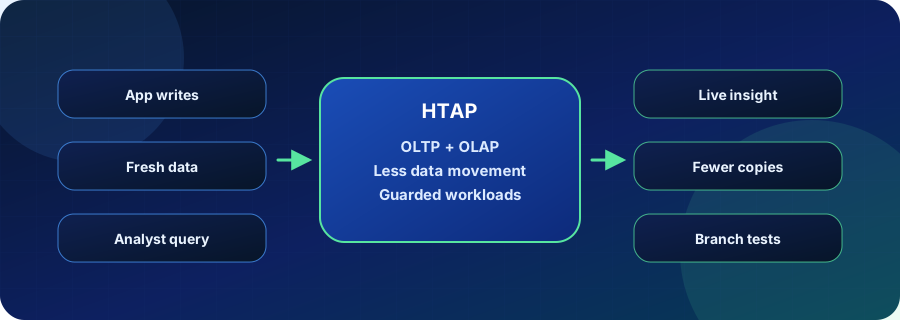
How HTAP Works
HTAP systems bring operational and analytical access closer together. That can mean one engine serving both patterns, a tightly coupled storage layer, or a Postgres-first platform that reduces the need for separate copies for every analytics workflow.
In practice, teams still need to separate risky workloads, test query plans, and decide which analytics tasks belong near the operational database and which need a dedicated warehouse or lakehouse.
Where Teams Use HTAP
HTAP is useful when teams need fresher reporting, fraud detection, operational dashboards, AI feature generation, or customer-facing analytics that cannot wait for slow batch movement.
Common patterns include:
- operational dashboards over recent transactions
- analytics features inside SaaS products
- AI retrieval or feature workflows near app data
- QA branches for analytics query changes
- reducing duplicate staging and warehouse copies
Need Postgres workflows for transactional and analytical data? Vela helps teams test operational analytics and branch data workflows without turning shared staging into the control point. Explore unified Postgres
HTAP vs OLTP vs OLAP
HTAP is not a license to run every query on the same path. It is an architecture choice that needs workload design.
| Pattern | Optimized for | Best fit | Common limitation |
|---|---|---|---|
| OLTP | Fast, correct transactions | Applications, orders, user actions | Not ideal for large analytical scans |
| OLAP | Aggregations and analysis | Reporting, BI, historical analytics | Often depends on data movement |
| HTAP | Closer transactional and analytical access | Fresh operational analytics | Requires workload isolation and testing |
| Vela workflow | Branches and production-like environments | Testing data workflows before rollout | Needs clear promotion and cleanup rules |
How HTAP Relates to Vela
Vela positions Postgres as a platform for more than one database workflow. That includes branching, cloning, and unified data workflows where teams can test operational analytics before pushing them into production.
The useful Vela role is not to make every analytical query safe automatically. It is to give teams production-like branches and controlled environments to validate query behavior, schema changes, and data movement assumptions.
Operational Checks
Before adopting HTAP patterns, verify:
- which analytical queries can run near operational data
- how resource isolation and limits will be enforced
- whether query plans are tested against production-like data
- how branches or clones validate changes before rollout
- when data should still move to a dedicated analytics system
Related Vela Reading
Start with How Vela Works, Database Branching, Branch per PR, and the Vela articles library. For adjacent glossary terms, review Unified Database, OLTP (Online Transaction Processing), OLAP (Online Analytical Processing), Vector Search.