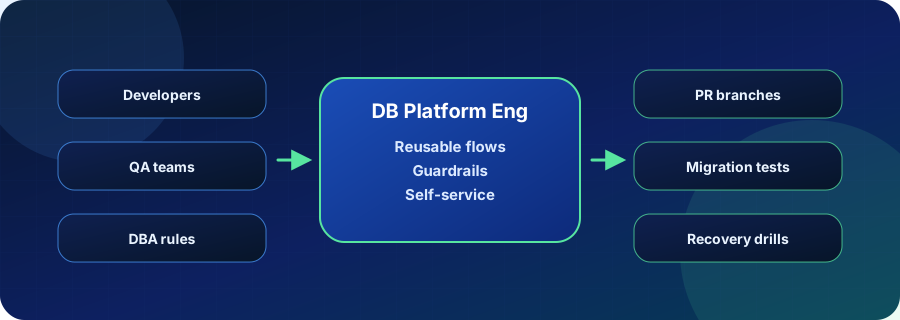
Database platform engineering applies platform-engineering principles to database workflows. Instead of asking every team to invent its own provisioning, staging refresh, migration testing, backup validation, and cleanup process, a platform team creates reusable workflows with guardrails.
For Postgres teams, this practice matters because the database is often the last part of the developer experience that remains ticket-driven and manual. Branches, clones, and production-like test environments are natural targets for platform engineering.
What Database Platform Engineering Means
Database platform engineering creates an internal product around database lifecycle operations. The platform exposes safe workflows to developers and QA teams while enforcing standards around data access, retention, recovery, and observability.
This is different from a tool-only approach. The goal is to make common database workflows easier to consume and harder to misuse.
Where Teams Use Database Platform Engineering
Teams use database platform engineering when database operations become a bottleneck for product delivery. This often happens when staging is shared, migrations are risky, test data is stale, and database requests require manual coordination.
Common patterns include:
- branch-per-PR database workflows
- production-like QA environments
- migration rehearsal and rollback validation
- self-service database provisioning with quotas
- standardized recovery and restore testing
Need database workflows that behave like an internal platform? Vela gives Postgres teams branches, clones, and lifecycle workflows that platform engineers can standardize. See how Vela works
Database Platform Engineering vs Traditional Database Operations
The difference is whether database workflows are treated as reusable platform capabilities or one-off operational tasks.
| Approach | Operating style | Best fit | Common limitation |
|---|---|---|---|
| Traditional DBA operations | Manual requests and scripts | Tightly controlled production changes | Slow for developer and QA workflows |
| Application-only platform | Apps are self-service, databases are separate | Early platform adoption | Database experience remains fragmented |
| Database platform engineering | Reusable governed database workflows | Developer and QA self-service | Requires product ownership |
| Vela workflow | Postgres branches and clones | Production-like testing and migration workflows | Requires policy and cleanup rules |
How Database Platform Engineering Relates to Vela
Vela is relevant because it gives platform engineers concrete Postgres workflows to standardize: branching, cloning, QA environments, and migration testing. These workflows reduce reliance on a shared staging database and manual restore processes.
The result is a database developer experience that can fit internal platform goals without hiding PostgreSQL behavior.
Operational Checks
Before investing in database platform engineering, verify:
- which database workflows create the most delivery friction
- how branch and clone access should be governed
- which teams own workflow design and support
- how platform usage, storage growth, and cleanup are measured
- how recovery and migration validation are included
Related Vela Reading
Start with How Vela Works, Database Branching, Branch per PR, and the Vela articles library. For adjacent glossary terms, review Postgres Data Platform, Self-Hosted Postgres Platform, OpenShift Database Platform, Vela.