Performance tuning in PostgreSQL is rarely about a single setting. It is about understanding workloads, index strategy, memory usage, and I/O behavior together so the database remains predictable under pressure.
Open source tools help you observe real query behavior, reproduce bottlenecks, and validate changes before you ship. The best teams treat tuning as an ongoing practice rather than a one-time fix.
This guide covers the best open source tools for PostgreSQL performance tuning and how teams can move from diagnostics to safer workflows.
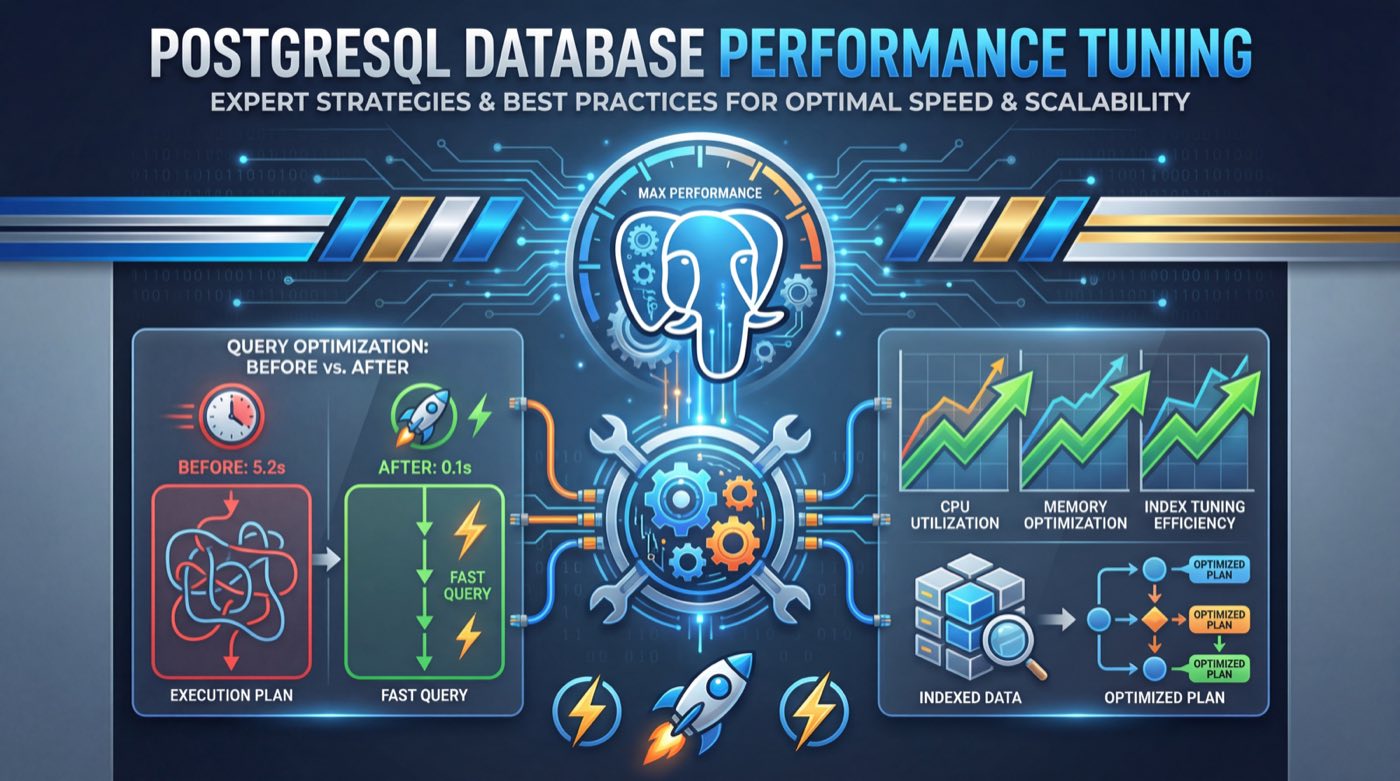
Why PostgreSQL Performance Tuning Is Hard
Performance issues often emerge from a combination of factors: missing indexes, poor query plans, lock contention, and bursty workloads that overwhelm I/O.
Tuning without production-like data is risky. A change that helps one workload can harm another, so teams need repeatable testing environments to validate improvements.
Open Source PostgreSQL Performance Tools
These tools provide query analysis, benchmark data, and diagnostics. Each helps in a different phase of tuning.
1. pg_stat_statements
pg_stat_statements surfaces query performance statistics, including total time, mean time, and I/O usage.
It is the fastest way to identify the queries that matter most, but you still need plan analysis to understand the cause.
2. Vela (safe tuning workflows)
Vela makes performance tuning safer by providing instant clones and branching out of the box, so teams can test indexes, configs, and query plans against production-like data.
Instead of tuning on shared staging, each change runs in isolation and can be rolled back instantly. Try the free sandbox to see how it works.
3. EXPLAIN and auto_explain
EXPLAIN reveals query plans, while auto_explain logs plans for slow queries automatically.
These tools are essential for diagnosing planner decisions, but require experience to interpret at scale.
4. pgbench
pgbench is PostgreSQL’s built-in benchmarking tool. It helps teams simulate workloads and compare performance changes.
Benchmarking is only useful when the workload matches production, which requires thoughtful dataset design.
5. pgbadger
pgbadger analyzes PostgreSQL logs to surface slow queries and contention patterns. It provides a different view than query stats alone.
It is especially useful for post-incident analysis and historical trends.
6. pgtune
pgtune provides configuration recommendations based on hardware and workload assumptions.
It is a good starting point, but real tuning always requires workload testing.
For workflow-level performance testing, see How Vela Works: Branching and the PostgreSQL benchmarks.
Postgres that moves at product speed.
Preview environments, safe migrations, and predictable performance.
Launch your backendWhere These Tools Work Well
Open source tuning tools provide deep visibility into query behavior and system performance when teams are disciplined about measurement.
- Identifying expensive queries and missing indexes
- Validating configuration changes against benchmarks
- Diagnosing regression causes after releases
With the right baselines, tuning becomes a repeatable process.
Where Performance Tuning Breaks Down
Tuning often fails when teams cannot reproduce production workloads or when testing environments are shared and inconsistent.
Changes get deployed without proper rehearsal because creating new environments is too expensive or too slow.
From Diagnostics to Safe Iteration
The fastest tuning teams create isolated environments, run benchmarks, validate changes, and discard the clone when done.
That workflow requires instant cloning and branching, which is why performance tuning increasingly depends on platform capabilities.
Where Vela Fits
Vela enables instant clones so teams can test indexes, query plans, and configuration changes against production-like data without disrupting others, engineered on Simplyblock’s high-performance distributed NVMe/TCP storage.
Learn more in How Vela Works or start with the free sandbox.
Final Thoughts
Performance tuning is a workflow, not a single fix. Open source tools provide visibility, but safe iteration requires fast, isolated environments to validate changes with confidence.