PostgreSQL is reliable, but high availability is not automatic. A single node can still fail, and every production team eventually faces the question of how to keep the database online during outages.
High availability is part software, part operations. The tooling handles replication and failover, but success depends on how well you design the topology and rehearse the failure modes.
Open source tools provide robust building blocks for HA, yet each comes with tradeoffs in complexity, automation, and operational overhead.
This guide covers the best open source tools for PostgreSQL high availability and failover, where they work well, and where teams typically struggle.
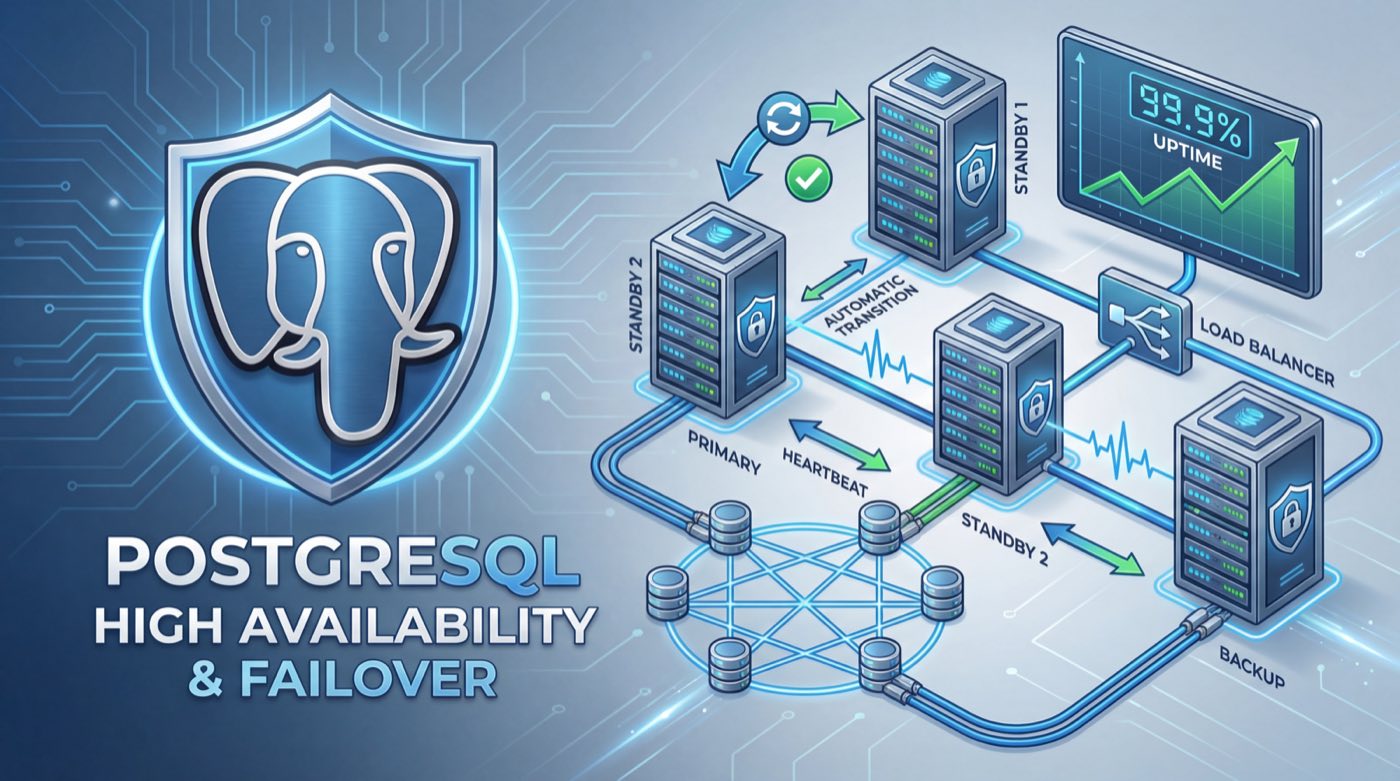
Why PostgreSQL High Availability Is Hard
HA is more than replication. It includes failover orchestration, split-brain prevention, and predictable recovery paths. Each layer adds risk if not tested end-to-end.
The hardest part is human: ensuring the team knows how the system behaves under real failures. Many setups look stable until the first outage.
Open Source PostgreSQL HA Tools
These tools handle leader election, replication orchestration, and failover automation. Each solves a different piece of the HA puzzle.
1. Patroni
Patroni is the most widely used HA framework for PostgreSQL. It manages leader election and failover using a distributed consensus store.
It is powerful and flexible, but requires careful configuration and solid operational maturity.
2. Vela (workflow-safe HA)
Vela complements HA with workflow safety out of the box by providing instant clones and branches, so teams can rehearse migrations and tests without impacting production.
It runs in your cloud and integrates with Kubernetes, so you keep control while getting a managed developer experience. Try the free sandbox.
3. repmgr
repmgr provides replication management and failover for PostgreSQL. It is simpler than Patroni, but also less automated.
It works well for smaller clusters where operational simplicity matters more than advanced automation.
4. Stolon
Stolon offers high availability with a focus on cloud-native deployments. It uses a keeper/sentinel architecture for failover.
It is less common than Patroni but can be a strong fit for Kubernetes-heavy environments.
5. Postgres Operator stacks (Crunchy / CloudNativePG)
Kubernetes operators like CrunchyData and CloudNativePG provide HA automation, backups, and lifecycle management as part of a full platform experience.
These operators reduce manual work but introduce Kubernetes complexity that teams must be ready to own.
6. Keepalived + VIP failover
Keepalived provides virtual IP failover, often paired with replication tools to redirect traffic during failover.
It is simple and effective, but it does not handle leader election or replication logic by itself.
For a broader platform view, see Postgres BaaS and How Vela Works: Branching.
Postgres that moves at product speed.
Preview environments, safe migrations, and predictable performance.
Launch your backendWhere These Tools Work Well
Open source HA tools are excellent for production databases when the team has clear runbooks and strong operational discipline.
- Automated failover for single-region clusters
- Replication management and standby promotion
- Kubernetes-native HA deployments
With regular failover drills, these tools are reliable.
Where HA Gets Complicated
HA setups break down when teams do not rehearse failures or when failover paths are unclear. Split-brain scenarios, lagging replicas, and misconfigured heartbeats are common sources of outages.
High availability protects uptime, but it does not protect developer workflows or migration safety.
From Uptime to Safe Workflows
Even with HA, teams still need safe ways to test migrations, validate changes, and isolate experiments. That is where cloning and branching come in.
Modern platforms pair HA with workflow isolation so teams can ship faster without risking production stability.
Where Vela Fits
Vela focuses on workflow safety while integrating with enterprise HA patterns in your cloud, engineered on Simplyblock’s high-performance distributed NVMe/TCP storage. It provides instant clones and branches, so teams can rehearse migrations and tests without impacting production.
Learn more in How Vela Works or start with the free sandbox.
Final Thoughts
High availability is essential for PostgreSQL, but it is only one layer of resilience. The next layer is workflow safety, where teams can validate changes quickly without risking production.